Animals Safari in the Car: Merch Design Review
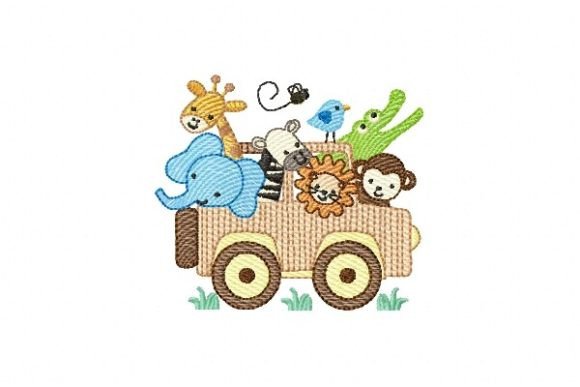
As a professional embroidery designer evaluating assets for commercial production, my first impression of Animals Safari in the Car is that it offers a distinctively friendly and approachable aesthetic. While the product description highlights its suitability for children’s clothing, from a business perspective, this design holds significant potential for niche branding. It does not read as generic clip art; rather, it possesses a playful narrative quality that can soften the visual identity of family-oriented businesses. For small business owners and apparel decorators, the challenge lies in translating this "cute" factor into a professional brand identity asset that maintains integrity across various merchandise types.
Evaluating Visual Personality for Commercial Branding
When reviewing a machine embroidery design for business use, we must look beyond the initial charm. Animals Safari in the Car projects a rustic yet modern handmade vibe. This specific combination is valuable for creative studios, pet brands, bakeries, and florists who want to signal warmth and accessibility. Unlike rigid corporate logos, this design acts as an emotional hook. However, because it features multiple elements (animals and a vehicle), the digitizing structure is critical. A design intended for baby animals must still possess clean stitch paths to avoid looking amateurish when scaled up for adult-sized tote bags or aprons.
For Etsy sellers and merch creators, this design bridges the gap between juvenile decor and boutique branding. It suggests a story—adventure, travel, and companionship—which aligns perfectly with businesses selling outdoor gear, pet supplies, or family services. The key is ensuring the embroidery file has been digitized with commercial durability in mind, not just decorative appeal.
Real-World Applications for Small Business Merch
In a real case scenario, imagine a local pet grooming salon or a mobile dog washing service. Animals Safari in the Car could serve as the primary chest logo on staff uniforms or as a branded patch on the side of a work van. The vehicle element directly correlates to the "mobile" aspect of the service, while the animals establish industry relevance. Here is how this design performs across different commercial applications:
- Apron Embroidery: For a bakery or café with a whimsical theme, placing this design on the upper bib of an apron creates immediate customer engagement. It serves as a conversation starter and reinforces a fun, safe environment for families.
- Tote Bag Design: Canvas totes are high-value items for craft fairs and markets. This design provides enough visual weight to anchor the center of a bag without requiring excessive text. It transforms a utility item into a desirable handmade product.
- Embroidered Patches: Creating standalone patches allows for versatile inventory. These can be sold as add-ons at checkout or used to brand packaging. The enclosed nature of a car scene often translates well to patch borders.
- Cap Embroidery: While challenging, the central grouping of this design could work on unstructured dad caps for a casual wear line. This appeals to parents and pet owners looking for subtle, non-corporate headwear.
Technical Constraints and Production Warnings
Despite its versatility, Animals Safari in the Car requires careful handling during production. As designers, we must identify where a design might fail before it hits the hoop. Because this motif involves intricate details typical of baby animals and vehicle features, stitch density management is paramount.
Fabric Texture and Stabilizer Selection
You cannot run this design on textured fabric without proper preparation. If applying this to a ribbed knit shirt or a coarse canvas tote, the fine details of the animals' faces may get lost in the weave. You must use an appropriate stabilizer—likely a cut-away for knits or a heavy tear-away for stable woven goods—to prevent puckering. Always test on the actual substrate; what works on a smooth quilting cotton may distort completely on a denim apron.
Sizing and Detail Integrity
Be extremely cautious with small patch sizes. Reducing a complex scene like Animals Safari in the Car below 3 inches can result in thread breaks and muddy visuals. Tiny lettering or thin outlines often disappear at reduced scales. Before committing to a bulk order of caps or sleeve cuffs, verify the minimum viable size of your specific digital embroidery file. If the original digitizer did not include small-size variations, you may need to edit the file to remove internal details or simplify outlines for smaller formats.
Thread Colors and Contrast
This design likely relies on color separation to define the animals against the car interior. On dark uniforms, ensure you have adequate underlay or light-colored outlining to maintain definition. High contrast is essential for brand recognition from a distance. A low-contrast pastel version might look beautiful on a baby onesie but will vanish on a navy blue staff polo. Always review thread colors against the specific garment colorway before production.
Impact on Brand Value and Customer Trust
Using a recognizable, high-quality motif like Animals Safari in the Car signals that a business invests in its presentation. In the custom apparel market, poor registration or loose topstitching destroys perceived value. Conversely, crisp execution elevates a simple graphic into a premium brand asset. When customers see consistent, well-executed embroidery on staff wear and merchandise, it builds subconscious trust in the business's attention to detail.
Furthermore, this design supports visual consistency across diverse touchpoints. Seeing the same safari car motif on a website banner, a physical store sign, and a staff hat creates a cohesive ecosystem. For handmade brands, this consistency validates the price point of finished goods. It moves the product from "craft project" to "professional merchandise."
Designer Notes for Pre-Production Success
Before loading this design for a commercial run, follow this professional checklist to ensure your finished product meets business standards:
- Verify Licensing: Confirm that your purchase includes commercial rights for merchandise sales. Never assume a personal-use license covers branded retail items.
- Create Printable Mockups: Use software to overlay the design onto photos of your actual merchandise. Share these printable mockups with clients or stakeholders for approval before stitching. This manages expectations regarding size and placement.
- Test in Monochrome: Run a test stitch-out in black and white first. This reveals structural issues in the digitizing that color changes might hide. If the design reads clearly in grayscale, the color version will be successful.
- Check Hoop Size Compatibility: Ensure the design fits comfortably within your machine’s hoop with adequate margin for clamping. Crowding the hoop edges leads to tension issues and misalignment.
- Audit Spacing and Trims: Inspect the file for unnecessary jumps or trims that slow down production. Efficient pathing is crucial for profitable commercial embroidery.
- Compare Against Existing Assets: Place Animals Safari in the Car next to your current logo and fonts. Does the style match? If your existing branding is minimalist and geometric, this illustrative style might clash unless positioned as a specific seasonal or sub-brand collection.
Ultimately, Animals Safari in the Car is more than just a cute graphic for kids; it is a versatile tool for businesses targeting families and pet lovers. By respecting the technical requirements of stitch density, stabilizer choice, and sizing limitations, embroidery shops and makers can leverage this design to create merchandise that is both emotionally resonant and professionally durable. Always prioritize testing and quality control to ensure your branded patches and apparel reflect the excellence of your business.